The journey of takeout doesn’t end when the food leaves the kitchen. It ends with customers opening up their food package. Using the wrong type of takeaway packaging can cause the best-prepared dishes to go bad. This is why it is a must for a brand to select the right type of takeout boxes to ensure food safety and freshness, maintain temperature, and deliver them to customers’ hands in peak condition.
In this guide, we will walk you through how to choose the right takeaway packaging for food to align it with the diverse range of food items you offer.
What Makes Takeaway Food Packaging Effective?
Its design and key features can determine the effectiveness of takeaway food packaging. Takeaway food packaging is effective when it is balanced between functionality, sustainability, and branding to deliver food safely while maintaining its quality.
Here are the key features that are a must-have for every takeout food box:
- Leak-proof Designs
- Temperature Retentions
- Moisture Resistant
- Grease Resistant
- Durable
- Eco-friendly
- Easy to handle
Types of Takeaway Food Packaging
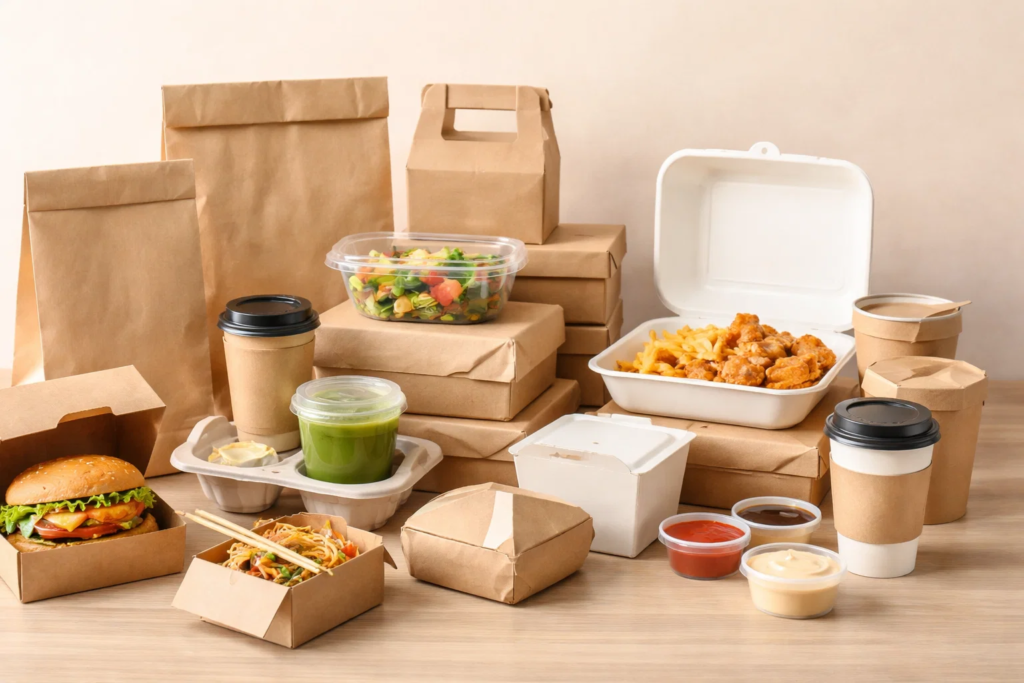
Before we dive into selecting the right takeaway food boxes, it is important to understand the type of food packaging available in the market. The right packaging types enhance the dining experience, while the wrong choice can cause your food to spoil.
Here are the types of takeaway food packaging:
Boxes & Containers
Boxes and containers are the most versatile takeaway packaging options, designed to hold everything from hot entrees to cold salads. They include:
- Custom burger boxes with ventilation to prevent sogginess
- Pizza boxes with heat retention features
- Pasta containers with secure lids
- Compartmentalized meal boxes for complete dishes
- Salad containers with separate dressing compartments
These boxes and containers are usually made from materials like cardboard, plastic, or biodegradable alternatives; they offer excellent structural support and stackability. These containers feature secure lids to prevent spills and maintain temperature. Their rigid construction protects food during transit, making them ideal for maintaining food integrity and presentation.
Wraps & Paper
Wraps and paper packaging provide lightweight, economical solutions for handheld foods and quick-service items. This category includes:
- Sandwich wraps and burger wrappers
- Deli paper for layering and wrapping
- Greaseproof sheets for fried items
- Foil wraps for temperature retention
- Parchment paper for baked goods
Perfect for sandwiches, wraps, pastries, and fried foods, these materials offer excellent grease resistance while allowing breathability to prevent condensation. Paper-based options are biodegradable and easily customizable with branding. Their compact nature reduces storage space and shipping costs.
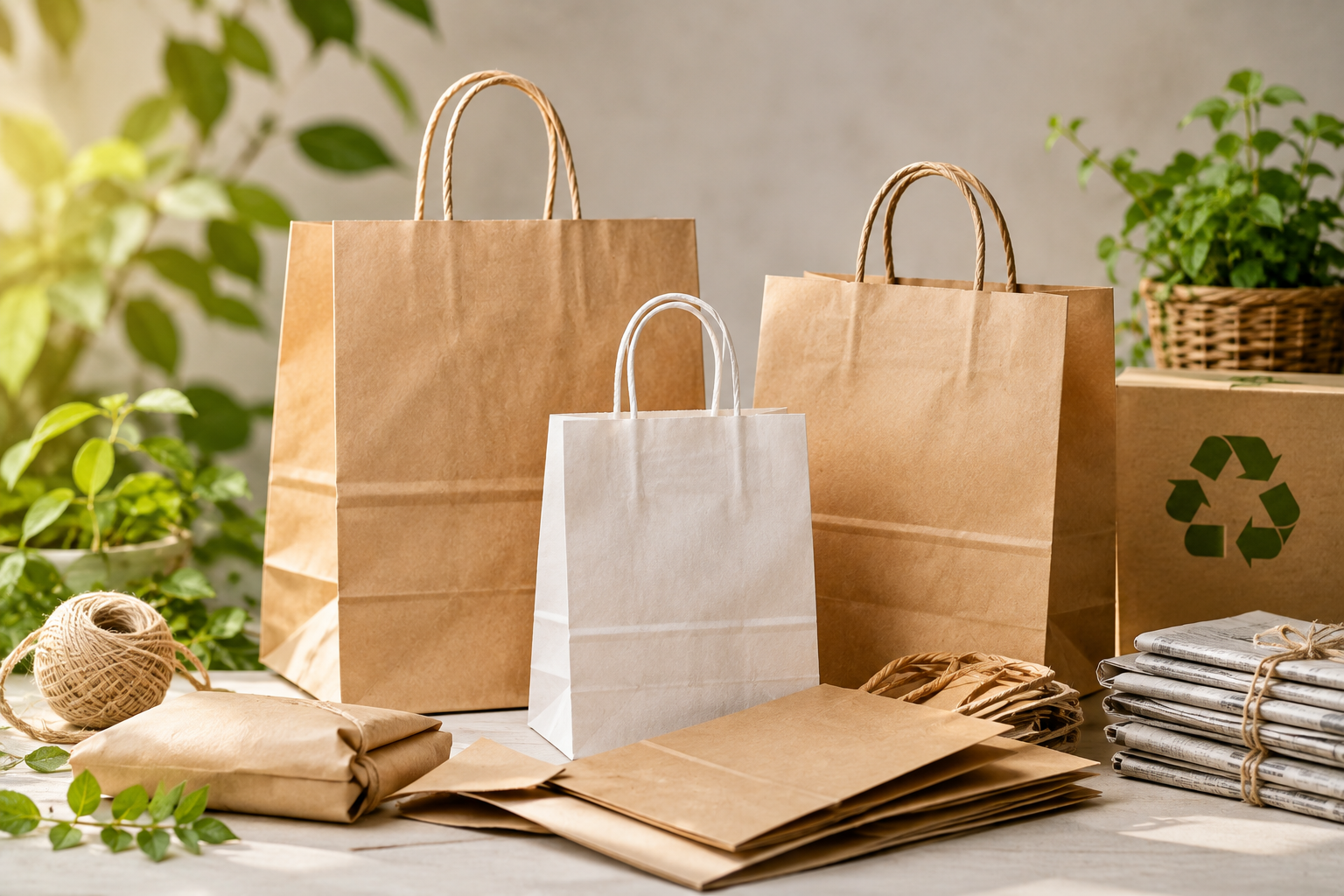
Paper Bags
Bags serve as both primary packaging and convenient carriers for takeaway orders. Options include:
- Paper bags for dry items and baked goods
- Plastic bags with moisture resistance
- Insulated delivery bags for temperature control
- Reusable cloth bags for eco-conscious brands
- Handle-reinforced bags for heavier orders
Paper bags are eco-friendly and ideal for lighter meals, while insulated bags maintain food temperature during delivery. They provide easy portability and can accommodate multiple containers simultaneously. Branded bags serve as mobile advertisements, making them valuable marketing tools.
How to Choose the Right Packaging for Your Food Type
Choosing takeaway packaging isn’t just picking a random box and calling it a day. Every food item has its own needs based on temperature, texture, moisture, and how far it’s traveling. What keeps fried chicken crispy can totally ruin a fresh salad. And packaging that works fine for quick pickup might fail during delivery. Getting this right means better food quality and happier customers. Here’s what actually matters:
Hot vs Cold Food
Hot food needs packaging that holds heat without trapping too much steam. If there’s no ventilation, things get soggy real quick. Go for insulated materials like molded fiber or double-walled cardboard. Ventilated custom burger boxes work great because they keep food warm while maintaining texture.
Cold food is all about freshness. Tight seals help prevent moisture loss, while breathable materials keep items like salads from wilting. Clear containers are a plus since they show off the food. For longer trips, insulated bags with ice packs keep everything in check.
Greasy vs Dry Food
Greasy food needs serious protection. Without a grease-resistant lining, packaging gets weak and messy. Wax-lined paper, foil containers, or coated boxes handle this well. Double wrapping also helps avoid leaks and keeps things clean.
Dry food is easy. Simple paper bags or boxes do the job. No need for heavy materials. Keep it lightweight, breathable, and clean. Window packaging works well for baked goods, as it adds visual appeal without overcomplicating things.
Delivery vs Takeaway
Delivery packaging has to be tough. It should handle movement, stacking, and time. Strong closures, tamper-proof seals, and insulation are a must. No one wants spilled food after a 30-minute ride.
Takeaway packaging can be simpler. Since customers grab-and-go, focus more on convenience and presentation. Easy-to-carry designs, quick assembly, and solid branding matter more here.
Material Choices and Their Impact
Materials play a vital role in takeaway food packaging. The material you choose for the takeaway food boxes determines the quality, durability, and customization options. There is a wide range of materials from which you can select the right one for your food packaging.
Below are the following materials available in the market:
Kraft Paper
An eco-friendly and cost-effective packaging solution for brands looking to create reliable food boxes. Kraft paper is known for its durability and natural appearance, making it ideal for sustainable branding. This material can be customized according to the unique needs of different food products. It also allows easy printing and adheres well to labels, coatings, and finishing options, enhancing functionality.
Cardboard
Cardboard is a versatile and widely used packaging material for food boxes. It offers a smooth surface for high-quality printing, making it perfect for branding and product presentation. It is lightweight yet sturdy enough to protect food items during handling and delivery. Cardboard packaging can also be customized in various shapes and sizes to meet specific requirements.
Corrugated Board
Corrugated board provides extra strength and protection, especially for heavy or bulk food items. Its layered structure helps absorb shocks during transportation, keeping food products safe. This material is ideal for delivery and takeaway packaging where durability matters the most. It can also be customized with printing and coatings.
Biodegradable Materials
Biodegradable packaging materials are designed to break down naturally without harming the environment. These materials are perfect for brands that want to reduce their environmental impact while maintaining packaging quality. They work well for a variety of food items and can be tailored to suit different packaging needs.
Plastic Alternatives
Plastic alternatives, such as plant-based or compostable materials, offer a sustainable option for food packaging. These materials help reduce reliance on traditional plastics while still providing functionality and protection. They are suitable for modern brands aiming to align with eco-conscious consumers.
Cost vs Quality Trade-Off
Many food brands and restaurants end up choosing low-quality food packaging for takeout just to get lower rates on their orders. While it may sound appealing at first, cheaper packaging often comes at a cost. In many cases, manufacturers provide packaging that does not comply with FDA regulations or fails to withstand the challenges it faces during delivery.
It is always advisable to invest in high-quality custom boxes for food items that enhance the overall customer experience. Packaging should add excitement when the food is received, not take it away. However, if budget is a concern, ordering in bulk is a smarter approach. Many custom box manufacturers offer wholesale pricing on large orders, allowing businesses to stay cost-effective without compromising on quality.
Boosting Brand Visibility with Custom Takeaway Packaging
Custom takeaway packaging for food items allows you to enhance your brand identity while serving your savory food items. These boxes are a perfect vessel for you to incorporate your brand elements, such as custom logos, brand information, ingredients, and even a QR code that takes customers to your site for a review or a personal message when they scan it. Doing so will allow your brands to enhance their brand identity by using food packaging as a walking billboard.
Common Packaging Mistakes to Avoid
When selecting takeout packaging for your food items, you have to avoid common mistakes most restaurants make.
Here is the list of the common mistakes to avoid when selecting food packaging:
- Getting a wrong-sized box
- Packaging that has leakage issues
- Packaging that is not sustainable or recyclable
- Overpaying for unnecessary features that can be avoided.
If you avoid these common mistakes, you can rest assured that the takeaway packaging you receive will be just as you imagine it.
Conclusion
Choosing the right takeaway packaging is more than just a functional decision; it directly impacts food quality, customer satisfaction, and brand perception. From selecting the right materials to matching packaging with food types, every detail matters.
High-quality packaging ensures your food reaches customers fresh, secure, and visually appealing. While cost plays a role, compromising on quality can hurt your brand in the long run. By making smart packaging choices and avoiding common mistakes, businesses can deliver a better experience and build stronger customer trust.