The food and beverage industry has a major opportunity to grow profits whilst reducing environmental impact. Increasingly visible sustainability initiatives are driving consumers’ purchasing decisions, packaging legislation is becoming more stringent, and businesses that move first to alternative, less-waste disposable packaging methods such as 2oz paper cups will gain a competitive edge over those relying on established, less sustainable methods. By making greener choices with their packaging, food businesses can decrease their harm to the environment, increase their brand’s appeal to consumers, and gain customer loyalty and revenue that can last. Building a greener food business is not costly or time-consuming, it is a smart and sustainable business move.
Why Sustainable Packaging Has Become Non-Negotiable
Sustainable packaging was once seen as a luxury for health food stores and organic cafes who were reaching out to a niche customer base of environmentally aware ‘greenies’. However, things changed drastically about a decade ago and sustainable packaging has become a mainstream requirement across all food service sectors; whether you’re a high street coffee chain, a street food vendor, a large restaurant group or an independent bakery.
Research into consumer behaviour has found that packaging sustainability is one of the key factors that consider people’s purchasing decisions. For a significant proportion of the market, sustainable packaging is now a key factor in how they decide whether or not to use a business. Many young consumers say they would actively avoid a business that has unsustainable packaging. However, those businesses using sustainable packaging are being lauded on social media by customers who are happy to share their positive experiences and recommend others to do business with them. Conversely, businesses that are perceived to be failing the environmental test are being heavily criticised online.
Consumer pressures, amplified by increasing regulatory requirements are fundamentally changing the packaging landscape. In many countries across Europe governments have introduced or announced bans on single use plastics such as straws and microbeads, imposed requirements on the percentage of recycled content that must be used and are placing a new owner of the end of life packaging bill – extending producer responsibility. Those businesses that delay will eventually pay a higher price, undergo a more rapid transformation and miss out on packaging innovations that are yet allowing companies to build brand.
Understanding Your Current Packaging Footprint
Most important, food and drink companies first need to get a realistic measure of the make-up and environmental impact of their packaging before devising a sustainable strategy. Here, many companies are unaware of the true environmental impact of their packaging – often underestimating it due to a misperception of packaging based on the products that are most visible i.e. primary packaging; in reality secondary packaging, inner packaging and other ‘hidden’ forms of packaging such as disposable products for high volume use can have a disproportionate effect on overall environmental impact.
A useful starting audit covers these key areas:
- Volume assessment: How many units of each packaging item are used weekly and annually
- Material identification of article: The actual material of which the article is made, including coatings, inks, adhesives etc
- End-of-life pathway: Whether each item is recyclable, compostable, or destined for landfill
- Supply chain characteristics: Organisational level, complexity, length of the supply chain, number of organisations involved and environmental concerns along the chain
- Customer touchpoints: Packaging items customers come into contact with most and remember best
The audit creates a useful image of areas of highest impact, as well as highlights substitution options for greatest gains. By seeing how items in your kitchen relate to packages of environmental impact, you may be surprised to find out that a small handful of high volume items generate most of the packaging waste in your kitchen, and even a single substitution could lead to substantial reductions in environmental impact.
Paper Cups: The High-Volume Sustainability Opportunity
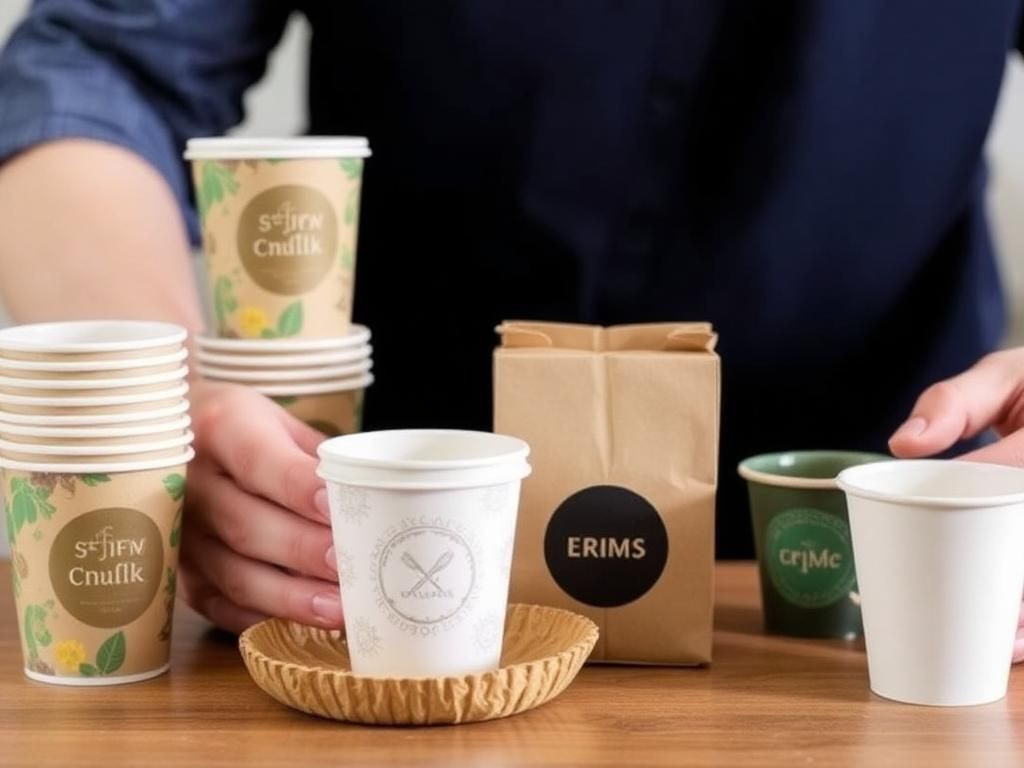
For cafes, coffee shops, market stalls and any food businesses selling hot and cold drinks, the cup is the highest volume packaging item they will use, therefore one of the biggest sustainability opportunities available. However many disposable cups contain a paper element lined with plastic polyethylene, making them unsuitable for recycling in standard paper recycling streams.
Used disposable cups are perhaps the most recognisable form of waste in the food service industry, with billions ending up in landfill each year. Whilst appearing to be made of paper, conventional disposable cups are in fact coated with a thin layer of plastic to prevent leakage, a fact that is now well known to customers. As a result, businesses that continue to use conventional lined cups are putting themselves at risk of incurring reputational damage amongst an increasingly environmentally aware customer base.
You don’t have to serve drinks in plastic cups anymore. Many sustainable alternatives have emerged that not only contain liquids and foods safely but also allow customers to enjoy their drinks and meals sustainably, meaning they can be recycled or composted. The plant-based lining of cups made from disposable materials such as bioplastic (polylactic acid) can perform the same function. For example, double wall paper cups can also include a sleeve-free design to add extra insulation to hot drinks. There are lots of options available that offer sustainable solutions that don’t mean you have to compromise on the customer experience or how you can recycle the cups.
Practical Steps for Food Businesses to Go Sustainable
We recommend adopting packaging changes in a gradual and staged approach. Making all changes at once can create operational, cash flow and communications issues for your staff and stakeholders. It is better to develop a phased approach that delivers sustainable packaging change in a manner that is sustainable for your business.
A practical phased approach:
- Start with the highest volume items in your kitchen where the substitution will have the greatest environmental impact and where using a more sustainable item will help you to realize cost savings from volume discounts
- Test with staff before customer launch so they need to understand the new materials, how to handle them appropriately and be confident in communicating the new development to customers in a positive way
- Implement changes proactively by clearly signifying implemented changes and keeping customers informed on social media while simultaneously discussing the updates with customers
- Monitor customer acceptance and plant performance before extending this substitution to other packaging types
- Review and concentrate on supplier relationships where appropriate by undertaking evaluation of potential suppliers to select those who share organisational sustainability values and are aligned to future business direction while ensuring robust sustainability standards
- Document and measure progress by logging progress related to waste reduction, financials, and customer feedback to build business case for future investment
The Branding Opportunity in Custom Printed Eco-Boxes
Sustainable packaging and branded packaging are not two separate issues. The most effective sustainable packaging is that which incorporates environmental benefits whilst simultaneously creating packaging which supports brand building and communicates quality.
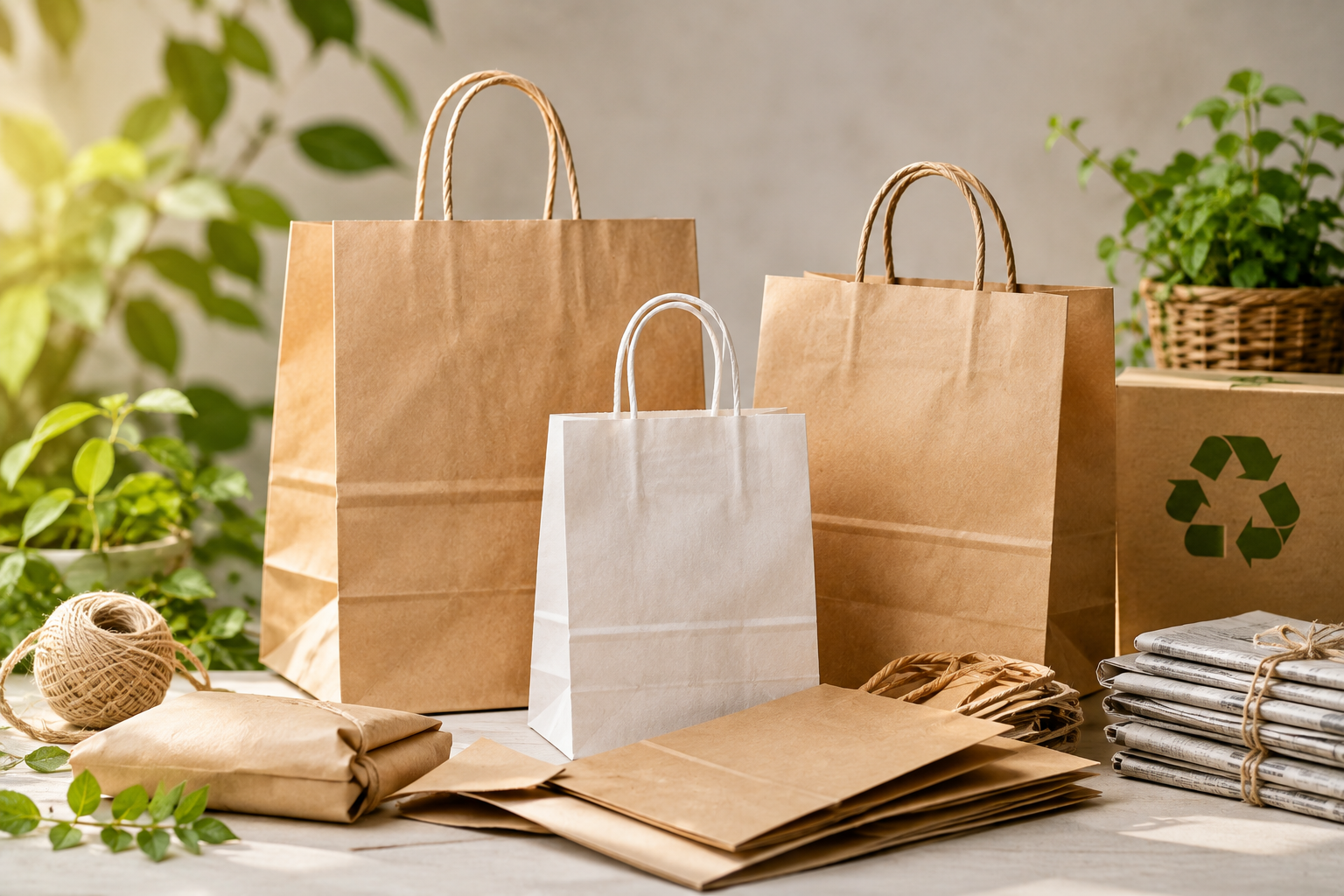
Businesses that work with ZEE Custom Boxes UK show that custom sustainable packaging is more visually striking than regular packaging and environmentally friendly too. Using kraft paperboard in its most basic form as the material for boxes to deliver food conveys a natural, pure and processed on a minimal scale message that is relevant to many food businesses today with a message around high quality ingredients and honest produce. The visual impact and message to customers is often better than packaging with lots of graphics printed on plastic coated material. In addition to simply holding an item, custom boxes can create an unboxing experience that is photogenic enough for customers to take a picture and share on their social media channels for free marketing, increase perceived value of your product through prestige, create a consistent brand image across all touch points, and create a memorable experience with your customer across multiple interactions.
Certifications and Claims: Getting It Right
Whilst sustainable packaging is growing in popularity, there is growing concern that greenwashing is also on the rise, and with it, the need for clear labelling to prevent misleading consumers. Businesses making sustainability claims need to ensure these claims are accurate, meaningful and qualified to avoid running foul of regulation and damaging brand.
Key certifications to look for and understand:
- FSC certification: Certified paper and board from responsibly managed forests with verified chain of custody
- Seedling logo: European standard for industrial compostability according to EN 13432
- OK compost HOME: Suitable for home composting at room temperature – no industrial composting facility required
- OPRL guidance: UK labelling guidance to help consumers know what to do with a package
- BPI certification: North American compostability standard for relevant markets
Companies should check for certification documents from suppliers and make no claims beyond those certifications. Packaging can be recyclable, yet if the materials in that package cannot be processed by local recycling facilities then making such a claim can give consumers a false impression, and let them down when they discover the truth.
Communicating Your Sustainability Story
To get the greatest return on sustainable packaging investment, it needs to be communicated to customers who wouldn’t otherwise know the difference. Most customers understand sustainable packaging but lack information to tell the difference.
Effective communication strategies include:
- Brief on-pack messaging that communicates packaging materials and recycling information
- Showcase point of sale signage at ordering points and collection points informing customers of the sustainable packaging used
- Social media posts describing packaging types and eco-rationale
- Train your staff with useful product information so that they are able to respond to customer queries with appropriate knowledge and passion
- Partnerships with local composting and recycling programs where customers can drop off materials for proper recycling
Those building the strongest brand around sustainability are having an ongoing conversation with customers, rather than just announcing it once and then touting it afterwards. That means periodic updates on sustainability efforts, transparency about what still needs work, and a thoughtful and knowing response to customer questions.
The Financial Reality of Sustainable Packaging
Currently sustainable packaging solutions have a small unit cost premium over standard packaging formats. In a competitive industry and with thin margins for many food businesses operating in the sector, cost is a primary consideration. However, it is important to consider total cost of ownership as opposed to unit price.
Consider the full financial picture:
- Volume purchasing of standardised sustainable packaging reduces costs per unit
- The premium feel of quality sustainable packaging supports higher menu pricing
- Customer retention is boosted by improvements in sustainability credentials which then lower the customer acquisition cost
- Removed or reduced risk of future non-compliance resulting in costly legislative changes
- Staff engagement benefits from working for an environmentally responsible employer
- Sustainability credentials are a marketing strength which can offset the need for more paid marketing
Much fear around sustainable packaging comes down to initial concerns over cost and perceived trade-offs to the brand image. Often within a 12 month period businesses realise the overall cost is neutral or even positive, and the brand benefits have far exceeded expectations. While other competitors are actively capturing the share of sustainability conscious consumers, it may be that you are just waiting for others to lead the way.